Arthur M. Dowell, III, PE
 Mr. Dowell brings more than 55 years of industrial experience in process engineering, design and startup, research, technology management, and safety evaluation. His extensive background includes providing process engineering support for operations at large, multi-process chemical sites, as well as leading the design and startup of major chemical processes. He has also held significant responsibilities in technology management, overseeing large segments of corporate manufacturing technology and facilitating integration across research, operations, optimization, and engineering functions.
Mr. Dowell began his formal training in process hazard analysis (PHA) and fault tree analysis (FTA) in 1978, and later in statistical process control (SPC), statistical quality control (SQC), and total quality management (TQM) in 1981. Since 1979, he has delivered training in process safety management (PSM), PHA, incident investigation, human factors, HAZOP, and FTA. Beginning in 1989, he dedicated his full-time efforts to process safety, leading PHAs, conducting fault tree and consequence analyses, assessing risk, investigating incidents, designing process safety systems, and mentoring emerging process safety professionals.
A recognized pioneer in the field, Mr. Dowell was an early leader in the development and application of Layer of Protection Analysis (LOPA) in the early 1990s. At Rohm and Haas Company, he spearheaded its implementation, contributed to its advancement through publications in industry symposia and journals, and trained engineers in its practical application.
He has authored numerous technical papers and articles on process safety and is the recipient of several prestigious industry awards, including:
• The AIChE Bill Doyle Award (1991) for the best Loss Prevention Symposium paper
• The ISA Albert F. Sperry Founders Award (2002) in recognition of his contributions to the development of LOPA
• The Mary Kay O’Connor Process Safety Center Merit Award (2011) for significant contributions to advancing process safety education, research, and practice
• Mr. Dowell has contributed extensively to industry standards and professional organizations. He served on the ISA S84 Standards Committee and the U.S. Technical Advisory Group to the IEC 61511 committee and was a primary author of Technical Report TR84.0.02 addressing the performance of Safety Instrumented Functions (SIFs).
He is a Fellow of the American Institute of Chemical Engineers (AIChE) and a member of ISA. His professional service includes roles on the South Texas Section of AIChE Executive Committee, as well as secretary and treasurer. He also works on the CCPS SAChE (Safety and Chemical Engineering Education) Committee. Mr. Dowell is a licensed Professional Engineer in Chemical Engineering in both Pennsylvania and Texas.
In addition, he has made significant contributions to Center for Chemical Process Safety (CCPS) publications, including:
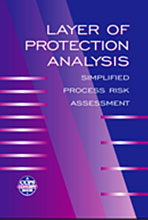
Layer of Protection Analysis (LOPA), CCPS/AIChE, 2001 (this is the original and still the definitive text on performing LOPA; Mr. Art Dowell III and Mr. Bridges were the primary authors)
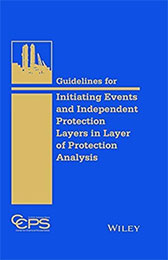
Guidelines for Initiating Events and Independent Protection Layers, CCPS/AIChE, 2015 (Mr. Bridges was the main author and Hal Thomas was a key contributor and Art Dowell was a peer reviewer; this is an essential supplement to the original LOPA book which was co-authored by Mr. Bridges and Art Dowell)
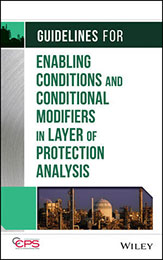
Guidelines for Enabling Events and Conditional Modifiers, CCPS/AIChE, 2013 (Mr. Bridges was a committee member and contributing author and Art Dowell was a peer reviewer; this is an essential supplement to the original LOPA book which was co-authored by Mr. Bridges)
Guidelines for Investigating Chemical Process Incidents, 2003 (2nd Edition) (this is the definitive textbook on investigation; Mr. Bridges was a primary author and Mr. Dowell participated in the first edition of this textbook)

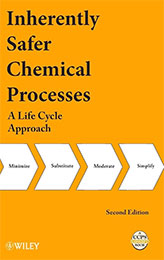
Inherently Safer Chemical Processes, CCPS/AIChE, (Art Dowell was committee co-chair and a co-author of the first edition of this definitive textbook in 1996, and was also a co-author of the 2nd edition of this book published in 2008)