wbridges

About Bill Bridges

William G. (Bill) Bridges is President of the Process Improvement Institute (PII). He has over 40 years of experience, including more than 30 in senior management and senior PSM advisory roles. Bill is considered one of the leading authorities on process safety engineering, risk management, and human error prevention.

Accounting for Human Error Probability in SIL Verification

One critical defect in the SIL standards (and technical reports from ANSI/ISA 84 committees) to remember is they do NOT account for specific human errors of mis-calibration (especially critical for SIFs with multiple sensor) and or leaving in bypass. So, the PFD to use for the IPL is the PFD(avg) from the SIL verification calc [...]

By |2016-12-07T01:33:33-07:00May 19th, 2015|Human Error, SIF, SIL|Comments Off on Accounting for Human Error Probability in SIL Verification

Failure Rates of Piping

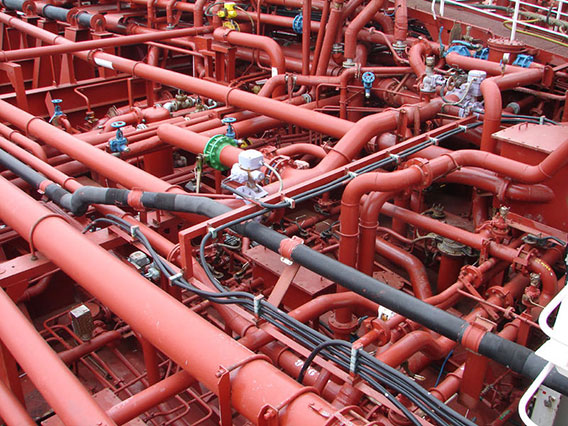
There is data in the new book, Guidelines for Initiating Events and Independent Protection Layers, 2015, CCPS/AIChE. (It is finally published as of January 8, 2015.) The failure rate is presented in probability of failure (due to damage mechanism such as corrosion) per meter of pipe. Two different values (for different diameter ranges) are presented [...]

By |2015-02-03T12:30:40-07:00February 3rd, 2015|Failure Rate, PMI|Comments Off on Failure Rates of Piping

Is the Quality of HAZOPs Declining?

We have not seen a drop in quality of the HAZOP (risk reviews) in projects lately. BUT, we saw a dramatic drop about 25 years ago; this occurred when lots of new folks (EPC companies especially) starting saying "Sure, we can provide that HAZOP for you." There was (and still is) little control of competency [...]

By |2016-12-07T01:33:33-07:00January 5th, 2015|HAZOP, PHA|Comments Off on Is the Quality of HAZOPs Declining?

Blame and Discipline: When is it Appropriate and When is it Not?

On the issues of blame: It is important to differentiate when the blame and discipline (positive and negative forms) are appropriate. If you find a worker doing something wrong (in the lower part of the safety iceberg), then blame and discipline may be appropriate once you figure out why the mistake is made. However, if [...]

By |2024-09-09T11:21:55-07:00August 22nd, 2014|Near Miss|Comments Off on Blame and Discipline: When is it Appropriate and When is it Not?

Human Factors and Accidents

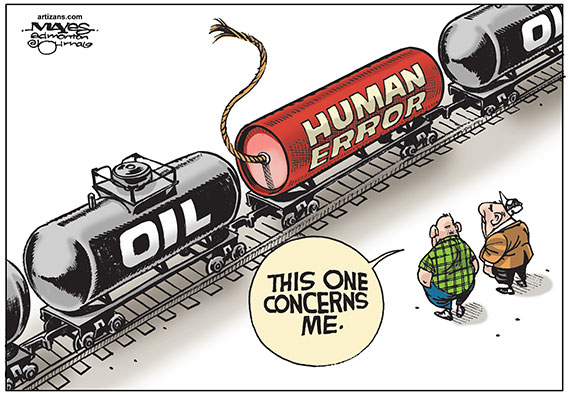
There is considerable science in the field of human error, and the human factors that make them more or less probable. And there are decades of experience from implementing management systems to control these human factors or to determine when compensating layers of protection are necessary when the human error rate is already as low [...]

By |2026-08-19T18:14:41-07:00August 6th, 2014|Human Factors, PSM, Root Cause|Comments Off on Human Factors and Accidents
Go to Top